
SpaceOps Fall Meeting in Rome,Italy
SpaceOps Fall Meeting in Rome, Italy
- Italian Space Agency (ASI) in Rome, Italy
- November 10-12, 2026
- Hosted by: ASI
Transport from Airports to Rome
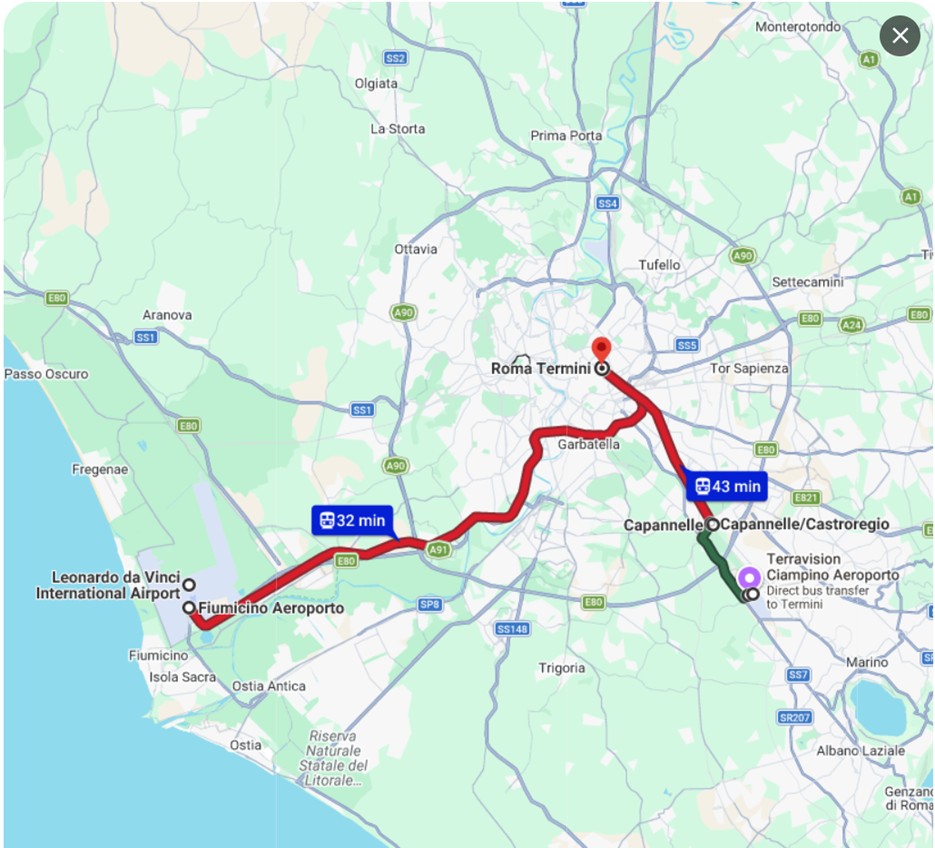
Fiumicino is highly connected by rail, making trains the best choice to avoid city traffic.
This is the fastest travel option. It connects the airport directly to Roma Termini Station in approximately 32 minutes with no intermediate stops. Trains depart every 15 minutes. A one-way ticket costs around €14.
- Booking: You can purchase tickets online directly on the Official Trenitalia Website, or you can purchase tickets directly from the airport.
- A convenient option if your hotel or venue is located near Roma Tiburtina, Roma Ostiense, or Roma Trastevere (please note it does not stop at Termini). The ticket costs approximately €8.
- Booking: Tickets can be purchased online via the Trenitalia Regional Ticket Service, or you can purchase tickets directly from the airport.
- Private bus companies connect the terminal exits to Termini Station in about 45–50 minutes. This is the most budget-friendly choice, with online fares around €6–€7.
- Terravision Booking: Buy tickets on the Terravision Fiumicino Page.
- SIT Bus Shuttle Booking: Tickets are available on the SIT SIT Bus Shuttle Portal.
- Available right outside the terminals. The official Municipality of Rome taxi service has a fixed, all-inclusive fare of €50 to any destination located within the Aurelian Walls.
Ciampino is physically closer to the city center but does not feature a direct train station inside the passenger terminal.
- This is Trenitalia’s official combined service. A dedicated shuttle bus takes you from the airport terminal to the Ciampino town train station in a few minutes, where you board a regional train straight to Roma Termini. Total travel time is around 35–40 minutes for a combined price of about €2.70.
- Booking: Simply search for “Ciampino Aeroporto” as your departure station on the Trenitalia Home Page to buy the single combined ticket.
- These connect the airport directly to Via Giolitti (next to Termini Station) in about 35–45 minutes. Online fares range between €6–€8.
- Terravision Booking: Purchase tickets at Terravision Ciampino.
- SIT Bus Shuttle Booking: Tickets are available at SIT Bus Shuttle.
Important Passenger Safety Notice
All participants are strongly advised to only use official Municipality of Rome taxis. Official taxis are white cars equipped with a “TAXI” sign on the roof, the crest of the city of Rome, and a clear license number displayed on the front doors. Please ignore any individuals offering private transport inside or right outside the terminal buildings and walk directly to the official taxi ranks located outside the arrivals area.
CAR RENTAL & TRAVEL BY CAR
To organize car rental pickups for participants attending a meeting in Rome, the process is well-structured at both major capitals’ airports, managed by Aeroporti di Roma (ADR). The two airports have different logistics and pickup points.
Fiumicino centralizes almost all major car rental providers within a single dedicated commercial area, located inside a multi-story structure directly connected to the passenger terminals.
- Office Location: Rental company desks (including international brands like Hertz and Europcar, as well as national ones like Sicily by Car) are located inside Torre OPEN (formerly known as Torre Uffici 2).
- How to get there: Upon exiting the baggage claim area in the Terminals, simply follow the pedestrian signs marked “Noleggio Auto / Car Rental” or “Torre OPEN”. The entire path is covered and goes through elevated pedestrian tunnels.
- Vehicle Pickup and Return: Once you complete the paperwork at the desk, the keys allow you to pick up the car directly from the multi-story parking structures adjacent to the tower (usually buildings Comfort A, B, or C). Vehicles must be returned to the same area by following the dedicated “Car Rental” road signs when entering the airport.
- Alternative Car Sharing: If participants prefer car sharing for short trips and flexible drop-offs, operators like Free2move have dedicated parking spaces in the Short Stay parking lot of Terminal 1.
Ciampino is a much more compact airport with a single terminal, but the car rental parking lots are located slightly further away from the main Arrivals exit.
- Office and Parking Location: The desks and vehicles of the rental companies (such as Avis, Drivalia, Locauto, and SIXT) are located along Via Mario Mameli, split between dedicated parking lots P6, P8, and P12.
- How to get there: Right outside the passenger terminal, there is a stop for the free shuttle bus service provided by the airport. The shuttle runs regularly (roughly every 10 minutes) and takes passengers directly to the rental car parking lots within a few minutes.
- Return: Vehicles must be returned to the exact same starting lot (e.g., Parking P8 for Europcar), and the shuttle will take participants back to the Departures area.
Important Information
- Documents and Booking in Advance: it is better to book your vehicles well in advance online. To pick up the car, you must present a valid driver’s license, an ID or passport, and a traditional credit card (debit or prepaid cards are usually not accepted, unless specifically cleared by the provider) under the main driver’s name.
- ZTL and Traffic in Rome: please be advised that the access to historic center of Rome is restricted by Limited Traffic Zones (ZTL). Most rental companies do not provide ZTL permits, so you might need to plan for park-and-ride options or check the policies of the host hotel.
HOTELS & EVENT SHUTTLE SERVICE
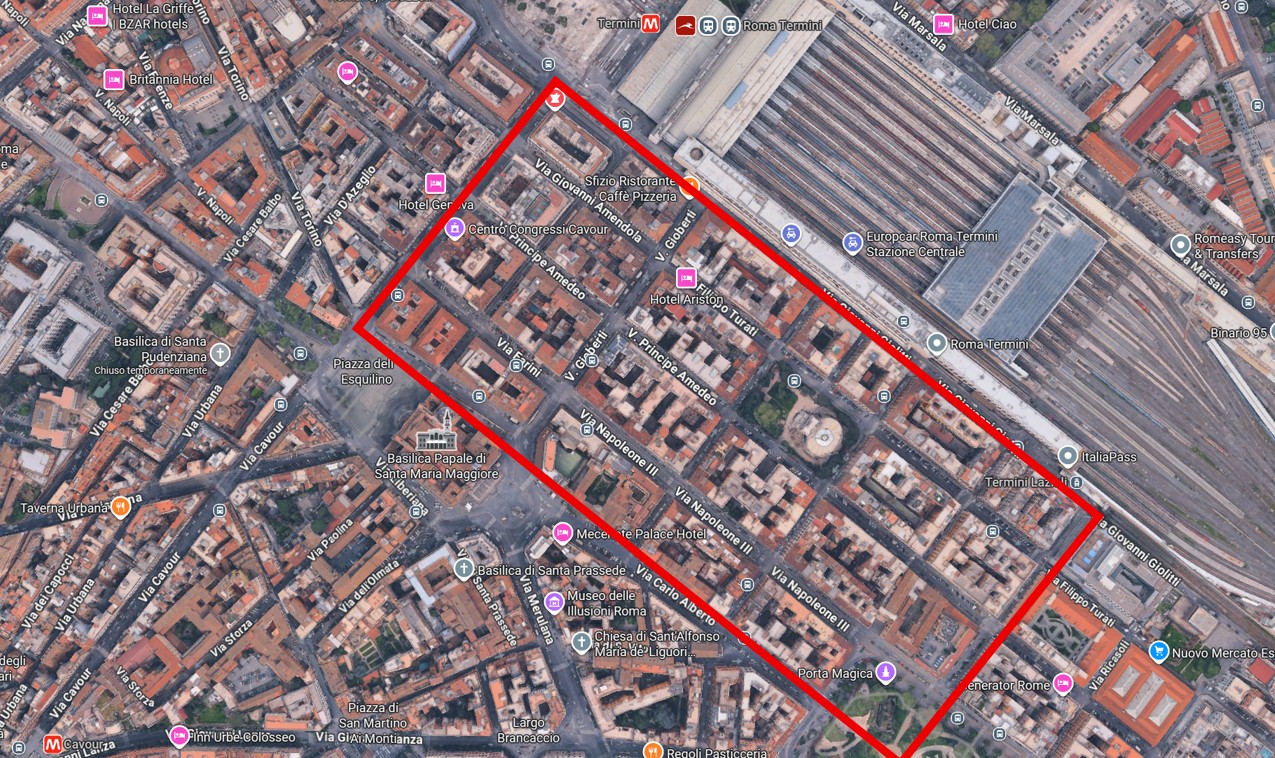
Termini Area Hotels (Access to Event Shuttle)
Hotel Diana Roof Garden (4★) – V. Principe Amedeo, 4
Hotel Orlanda (4★) – V. Principe Amedeo, 76
Hotel Palladium Palace (4★) – V. Gioberti, 36
Hotel Giglio Dell’Opera (3★) – V. Principe Amedeo, 14
Best Western Plus Hotel Universo (4★) – V. Principe Amedeo, 5/B
Starhotels Metropole (4★) – V. Principe Amedeo, 5/B
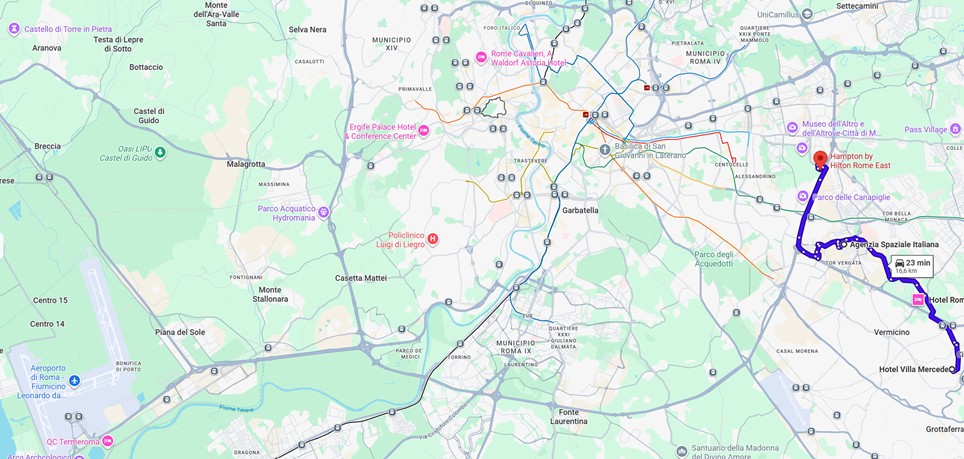
Near ASI Venue (Corporate Agreement – Taxi Only, No Shuttle)
Hampton by Hilton Roma Est – Via Marisa Bellisario
Villa Mercede – Frascati
Reaching ASI (Agenzia Spaziale Italiana)
To organize car rental pickups for participants attending a meeting in Rome, the process is well-structured at both major capitals’ airports, managed by Aeroporti di Roma (ADR). The two airports have different logistics and pickup points.
Approximately 30 minutes from city center depending on traffic
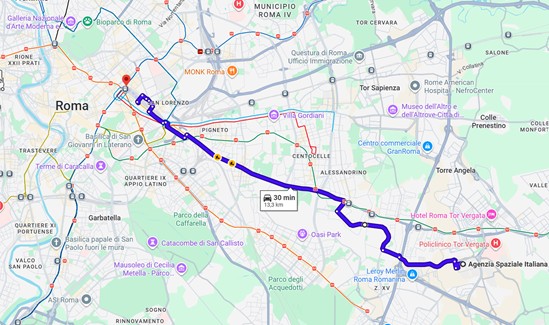
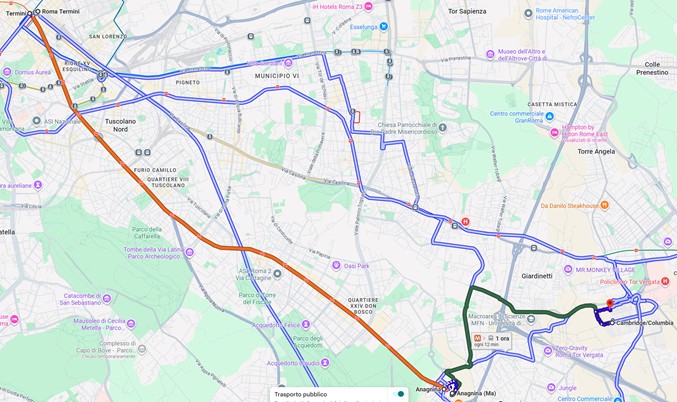
Metro A towards Anagnina to the final stop (23 min) → Bus 20 (Cambellotti) for 12 min → Get off at Cambridge/Columbia → Walk 700m.
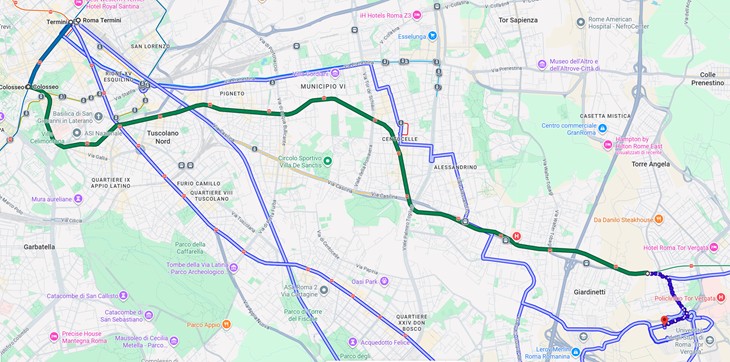
Metro B towards Laurentina to Colosseo (3 min) → Transfer to Metro C to Torrenova (23 min) → Walk 26 minutes or take a short taxi.
Rome Public Transit & Metro Guide
Moving around by subway in Rome is the fastest way to avoid street traffic. It strategically connects major transit hubs like Termini Station and Tiburtina Station with the historic center and the suburbs.
The Rome Metro network is managed by the municipal transit company, ATAC, and primarily consists of three lines (A, B/B1, and C) that form an “X” shape, intersecting in the heart of the city.
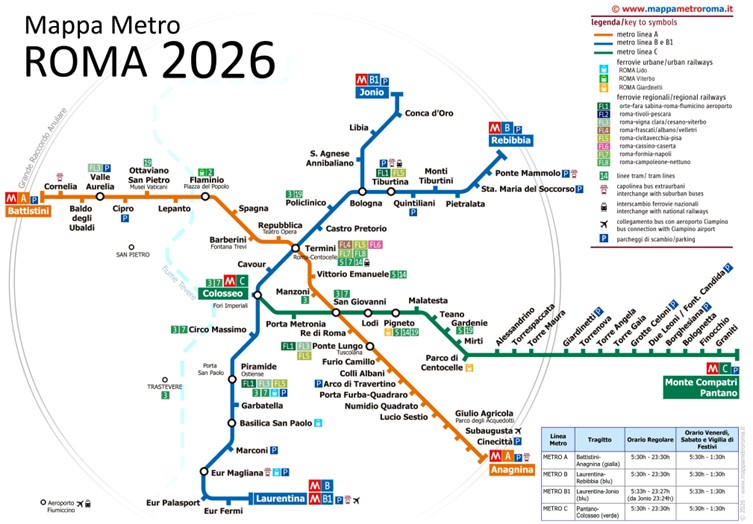
The Rome Metro network is managed by the municipal transit company, ATAC, and primarily consists of three lines (A, B/B1, and C) that form an “X” shape, intersecting in the heart of the city[cite: 1].
- Line A (Orange – Battistini ↔ Anagnina): Crosses the historic center from northwest to southeast[cite: 1]. This line is essential for tourism and business, stopping at Ottaviano (for St. Peter’s and the Vatican Museums), Flaminio (Piazza del Popolo), Spagna (Spanish Steps), Barberini (Trevi Fountain), and San Giovanni[cite: 1].
-
Line B (Blue – Laurentina ↔ Rebibbia / Conca d’Oro / Jonio): Cuts through the city from northeast to south[cite: 1]. It serves Tiburtina Station, the university area (Sapienza), the Colosseo (Colosseum), the Piramide area (hub for trains to the Ostia beach), and the EUR business district, which is ideal for many corporate meetings[cite: 1].
Watch out for the split: Starting from Bologna station, the line splits into two branches[cite: 1]. One branch goes toward Rebibbia, while the B1 branch detours toward Jonio[cite: 1]. Always check the platform monitors and the destination written on the front of the train before boarding[cite: 1].
- Line C (Green – San Giovanni ↔ Monte Compatri-Pantano): A fully automated line (driverless trains) connecting the eastern part of Rome[cite: 1]. It currently terminates at San Giovanni, where you can transfer to Line A[cite: 1]. Work to extend it further into the center (adding stops like Porta Metronia and Colosseo/Fori Imperiali) is near completion to connect it directly to Line B[cite: 1].
- Termini Station: The only underground intersection between Line A and Line B[cite: 1]. As the city’s main railway station, it is the perfect hub for travelers arriving via regional trains or airport connections (such as the Leonardo Express from Fiumicino)[cite: 1].
- San Giovanni Station: A crucial interchange point between Line A and Line C, highly useful for those coming from the eastern suburbs to reach the center[cite: 1].
Rome’s public transit uses an integrated fare system (Metrebus) valid on the metro, buses, trams, and regional trains (within the urban Rome limits of Trenitalia)[cite: 1].
- BIT (Standard Ticket): Costs €1.50 (with a planned increase to €2.00, so verify prior to travel) and is valid for 100 minutes from the time it is validated[cite: 1]. It allows only one entry through the subway turnstiles (but unlimited transfers to buses within the 100-minute window)[cite: 1].
- Passes and Tourist Tickets: 24-hour, 48-hour, 72-hour, or weekly tickets (CIS) are available and are cost-effective if participants make multiple trips on the same day[cite: 1].
-
Tap & Go (Contactless Payment): You do not need to buy a paper ticket[cite: 1]. You can tap your credit card, debit card, prepaid card, or smartphone (Apple Pay, Google Pay) directly at the turnstiles equipped with a contactless reader[cite: 1].
Logistical note: If you make multiple metro trips in a single day, the system automatically calculates the most cost-effective fare (capping it at the daily pass price once you exceed a certain number of rides)[cite: 1]. Remember to always use the exact same card/device at the gates[cite: 1].
- Sunday to Thursday: Lines open at 05:30 AM and the last trains leave from the terminal stations at 11:30 PM[cite: 1].
- Friday and Saturday: Service is extended for the weekend[cite: 1]. The last trains leave the terminal stations at 01:30 AM the following morning[cite: 1].
- Note on night maintenance: Always double-check the official ATAC Rome website closer to your meeting date[cite: 1]. Some lines (especially Line A) periodically undergo early evening closures for infrastructure upgrades, with surface shuttle buses replacing the trains[cite: 1].